Concierge & Public Health
Measles Immunity Testing and Travel Guidance
A physician-guided guide to records, immunity testing, vaccination and exposure planning
Published · 12 min read · The Remedy IV Health + Wellness
Medically reviewed by Dr. Jarrod Wilson, MD (FL License ME133911) ·
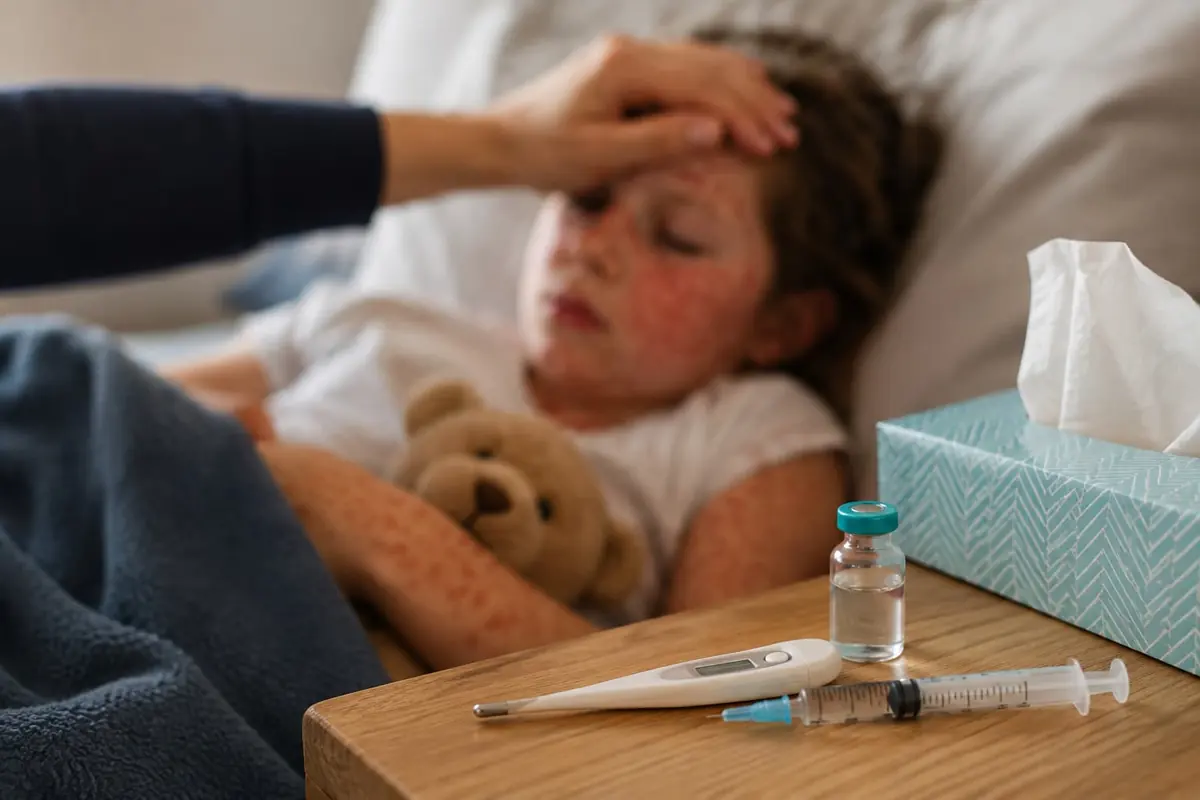
Measles activity in the United States has exceeded the total reported during all of 2025. Before international travel—or after a possible exposure—knowing what counts as evidence of immunity can help you make timely, medically appropriate decisions.
- 2026 has passed the 2025 case total.
- CDC reporting showed more than 2,300 confirmed U.S. cases by late July 2026, compared with approximately 2,288 during all of 2025.
- Most cases involve immunity gaps.
- Outbreaks spread most efficiently where people are unvaccinated, under-vaccinated or uncertain about their vaccination history.
- Travel preparation should begin early.
- International travelers should ideally confirm appropriate measles protection before departure rather than waiting until an outbreak affects their destination.
Featured Answer
To check whether you are likely protected against measles, first look for written vaccination records, laboratory evidence of immunity, laboratory confirmation of prior measles infection or another form of acceptable presumptive immunity. Most adults need at least one documented MMR dose, while international travelers and several higher-risk groups generally need two appropriately spaced doses. A measles IgG blood test may sometimes help when records are unavailable, but testing is not automatically necessary for everyone.
Why This Matters Now
Measles Has Again Become a Practical Health and Travel Concern
For many Americans, measles once felt like a disease confined to history books or distant outbreaks. That assumption is no longer safe. By late July 2026, the Centers for Disease Control and Prevention had reported more than 2,300 confirmed cases in the United States—surpassing the approximately 2,288 cases reported during all of 2025. The 2026 total represented the highest national level in decades.
Case totals can continue to change as state and federal health departments investigate outbreaks and confirm infections. The more useful takeaway is not a single number. It is that measles is circulating widely enough that vaccination records, travel plans and exposure response deserve renewed attention.
Measles is one of the most contagious human infections. It spreads through the air when an infected person coughs, sneezes or breathes. The virus can remain infectious in an indoor airspace after the person has left, which is why an exposure may occur without direct physical contact.
Most introductions into the United States are associated with international travel, but transmission can continue locally when the virus reaches communities with immunity gaps. You do not need to be traveling to a country experiencing a major outbreak to benefit from reviewing your records. Airports, conferences, cruise ships, schools, hotels, healthcare facilities and crowded events can all connect people from multiple regions.
Key Takeaways
- Written vaccine records are generally more useful than relying on memory.
- Most adults at routine risk need evidence of at least one measles-containing vaccine dose.
- International travelers, healthcare personnel, college students and some other higher-risk adults generally need evidence of two doses.
- A positive measles IgG antibody result may provide laboratory evidence of immunity, but blood testing is not required for every adult.
- If exposure is possible, call ahead before entering a clinic, urgent care center or emergency department.
- MMR is a live vaccine and may not be appropriate during pregnancy or for certain people with significant immune suppression.
What You’ll Learn
- What counts as evidence of measles immunity.
- When an antibody test may—and may not—be useful.
- How travel recommendations differ from routine adult recommendations.
- What to do before departure, after travel or following a possible exposure.
- When vaccination requires individualized clinical guidance.
A Practical Starting Point
Three Steps to Clarify Your Measles Protection.
Checking immunity is usually a records-and-risk assessment—not simply ordering every available laboratory test. Start with documentation, identify the recommendation that applies to your situation and use testing selectively when it would change the plan.
1. Locate Your Records
Check pediatric records, school or college health files, military records, state immunization registries, prior employers, pharmacies and previous medical practices. A dated written record is more reliable than remembering that you “probably had the shots.”
2. Identify Your Risk Group
Routine adult recommendations differ from recommendations for international travelers, healthcare personnel, postsecondary students, outbreak contacts and people who work or live in higher-exposure environments.
3. Discuss the Best Next Step
Depending on your records and medical history, the next step may be no action, vaccination, completion of a second dose or selective measles IgG testing. Pregnancy and immune suppression require special consideration.
Understanding Immunity
What Counts as Evidence That You Are Protected?
Public-health recommendations use the term presumptive evidence of immunity. This means there is adequate reason to consider a person protected without requiring a new antibody test after vaccination.
Depending on age and risk category, acceptable evidence may include written documentation of appropriate vaccination, laboratory evidence of immunity, laboratory confirmation of previous measles infection or birth before 1957. People born before 1957 are generally presumed to have been exposed during an era when measles circulated widely, although healthcare personnel and selected high-risk individuals may need a more individualized assessment.
| Situation | Typical Evidence Needed | Important Context |
|---|---|---|
| Most adults at routine risk | One documented dose of a measles-containing vaccine or other acceptable evidence of immunity | Providers generally do not need to screen every adult with antibody testing in non-outbreak settings. |
| International travelers age 12 months or older | Two documented doses separated by at least 28 days or other acceptable evidence | The CDC advises being fully protected before international departure. |
| Infants age 6 through 11 months traveling internationally | One early MMR dose before travel | This dose does not replace the routine two-dose series beginning after the first birthday. |
| Healthcare personnel or postsecondary students | Usually two documented doses or other acceptable evidence | These settings can involve greater exposure and transmission risk. |
| People with missing or uncertain records | Vaccination or selective laboratory evaluation | The best choice depends on risk, timing, contraindications and whether test results would alter management. |
Can a Blood Test Check Measles Immunity?
A measles IgG antibody test can identify laboratory evidence consistent with immunity. It may be useful when documentation is missing and the result would meaningfully affect a decision—for example, when a person has a contraindication to vaccination, needs occupational clearance or is working through a complex medical history.
However, antibody testing is not automatically the best first step. The CDC notes that providers generally do not need to actively screen most adult patients for measles immunity in non-outbreak areas. Antibody testing after appropriately documented vaccination is also not routinely recommended.
Commercial assays may not measure vaccine-induced immunity perfectly. A negative or equivocal result does not always mean a person has absolutely no immune protection, and interpreting a result can require clinical context. Conversely, a positive result is useful only if the correct test was ordered and the laboratory’s reference range is understood.
Clinical Insight
The most useful question is not simply, “Can I order a titer?” It is, “Would the result change what I should do?” If a healthy person without contraindications lacks documentation and needs protection for upcoming international travel, vaccination may be faster and more clinically useful than waiting for testing. When pregnancy, immune suppression or another contraindication is present, testing and specialist guidance may carry greater value.
Who Should Receive Two MMR Doses?
Most adults born in or after 1957 need at least one dose of MMR unless they have another acceptable form of immunity. Two doses are generally recommended for adults at higher risk of measles exposure or transmission.
This commonly includes international travelers, healthcare personnel and students attending postsecondary educational institutions. Public-health authorities may also recommend additional vaccination activity during an outbreak based on local epidemiology.
Someone who has already received one documented MMR dose and is entering a two-dose risk category generally needs a second dose, provided the doses are separated by at least 28 days and no contraindication exists.
There is not a universal recommendation for every adult in the country to receive repeated MMR boosters simply because cases are increasing. The correct approach depends on documentation, risk category and medical eligibility.
How to Prepare Before International Travel
The CDC recommends that international travelers be protected against measles before departure. Ideally, review vaccination records well in advance. For the best protection, travelers should complete appropriate MMR vaccination at least two weeks before leaving, although receiving a needed dose closer to departure may still be beneficial and should be discussed with a clinician.
Four to Six Weeks Before Travel
Locate records, review the destination’s measles activity, check whether two doses are documented and arrange a clinical review if vaccination history is incomplete.
At Least Two Weeks Before Departure
Complete recommended vaccination when possible. Adults needing a two-dose series require at least 28 days between doses, so early planning matters.
During and After Travel
Watch for fever, cough, runny nose, red eyes and a spreading rash. Symptoms may appear days after returning, so tell clinicians about recent travel.
Families traveling with infants need special planning. Infants ages 6 through 11 months should generally receive an early MMR dose before international travel. Because immune response at that age can differ, the early travel dose does not count toward the routine two-dose childhood series given after 12 months of age.
Travelers can review current public-health guidance through the CDC’s measles travel guidance and monitor global outbreak information through the CDC global measles outbreak resource.
What to Do After a Possible Measles Exposure
If you believe you were exposed, do not walk unannounced into a medical office, pharmacy, urgent care center or emergency department. Call first. Measles can remain infectious in indoor air, so healthcare teams need time to arrange appropriate isolation and protect other patients.
Gather the date, time and location of the possible exposure, your vaccination records, your date of birth, pregnancy status, immune-system conditions and current medications. Contact your healthcare provider or local public-health department promptly.
Post-exposure interventions are time-sensitive. For eligible people, MMR vaccination given within 72 hours of initial exposure may provide protection or modify illness. Immune globulin may be considered within six days for selected people at high risk of severe disease who cannot receive MMR or need additional protection. These decisions should be directed by healthcare and public-health professionals.
If symptoms develop, isolate from others and call ahead for instructions. Measles often begins with fever, cough, runny nose and red or watery eyes. A rash typically appears later, often beginning near the hairline or face and moving downward.
Who Needs Extra Caution Before Vaccination?
MMR is a live attenuated vaccine. It is not recommended during pregnancy, and pregnancy should generally be avoided for 28 days after vaccination. People with severe immune suppression, certain immune-system disorders or specific medication exposures may also be unable to receive it.
A history of a severe allergic reaction to a previous dose or vaccine component requires medical assessment. Recent receipt of blood products or immune globulin can affect vaccination timing. Mild illness is not always a reason to delay vaccination, but moderate or severe acute illness may change the plan.
People who are unsure about eligibility should bring a medication list and relevant medical history to their clinician. Personalized guidance is especially important for transplant recipients, people receiving chemotherapy, individuals taking potent immunosuppressive therapies and patients with complex immune disorders.
Why Measles Is More Than a Temporary Rash
Measles can cause pneumonia, dehydration, ear infections, hospitalization, encephalitis and death. Young children, pregnant people and individuals with weakened immune systems may face greater risks. Rarely, a progressive and fatal neurological condition called subacute sclerosing panencephalitis can develop years after infection.
Measles may also disrupt previously developed immune memory, a phenomenon sometimes described as immune amnesia. This does not mean every person loses all immunity after infection, but research suggests measles can impair immune defenses against pathogens the body previously recognized.
Evidence Snapshot
Two appropriately administered MMR doses are approximately 97% effective at preventing measles, while one dose is about 93% effective. Breakthrough cases can occur, but vaccinated people who develop measles are generally less likely to experience severe disease or transmit the virus than unvaccinated people.
Myth
Myth vs. Fact
If I received childhood vaccines, I automatically need another MMR booster because cases are rising.
Fact
There is no routine recommendation for repeated measles boosters for every fully vaccinated adult. Your documented doses and risk category determine whether any action is needed.
Myth
A measles antibody test is the only reliable way to know whether I am protected.
Fact
Appropriate written vaccination documentation is accepted evidence of immunity. Routine post-vaccination antibody testing is generally unnecessary.
Myth
Measles exposure requires direct contact with a person’s rash.
Fact
Measles spreads through airborne respiratory particles and can remain in an indoor space after an infected person leaves.
People Also Ask
Can I receive another MMR dose if I cannot find my records?
For many people without a contraindication, receiving an additional MMR dose is considered safe even if they may already be immune. The appropriate number of doses depends on age and risk category.
Does birth before 1957 mean I never need to think about measles?
Birth before 1957 is generally accepted as presumptive evidence of immunity because measles circulated widely during that period. Certain healthcare personnel and people in unusual risk situations may still need individualized evaluation.
Should I cancel travel because measles cases are increasing?
Travel decisions should consider your destination, health status, age, vaccination history and ability to complete recommended protection. Many travelers can substantially reduce risk by confirming immunity and following public-health guidance.
Can vitamins or immune-support treatments replace MMR vaccination?
No. General wellness practices may support overall health, but they do not create measles-specific immunity and should not replace vaccination or indicated post-exposure care.
Know Your Body Before You Optimize It
Measles preparation is a practical example of why personalized healthcare begins with reliable information. A person with two documented doses may need reassurance rather than another intervention. A traveler with one dose may need completion of the series. Someone who is pregnant or significantly immunocompromised may require a completely different plan.
Start with your medical history, documentation and actual exposure risk. REMEDY® Health + Wellness approach is to evaluate before recommending. Readers can explore additional physician-guided education in The Wellness Journal, review available wellness and clinical services, or learn more about concierge and urgent-care support.
Authoritative Resources
- CDC Measles Cases and Outbreaks
- CDC Measles Vaccine Recommendations
- CDC Questions About Measles
- Johns Hopkins U.S. Measles Tracker
How do I know whether I am immune to measles?
Look for written documentation of the recommended number of measles-containing vaccine doses, laboratory evidence of immunity, laboratory confirmation of previous infection or another accepted form of presumptive immunity. The number of documented doses needed depends on your age and risk category.
Should every adult get a measles antibody test?
No. Routine antibody screening is generally unnecessary for most adults in non-outbreak settings. Testing may be helpful when records are unavailable and the result would change vaccination, occupational or medical decisions.
How many MMR doses do international travelers need?
Travelers age 12 months and older without other acceptable evidence of immunity generally need two doses separated by at least 28 days. Infants 6 through 11 months generally need an early dose before international travel, followed by the routine series after age 12 months.
What if I leave for an international trip in less than two weeks?
Contact a healthcare professional promptly. Although vaccination is ideally completed at least two weeks before travel, a needed dose closer to departure may still provide benefit. Do not delay asking simply because the ideal window has passed.
What should I do if I was exposed to measles?
Call your healthcare provider or public-health department immediately and avoid arriving unannounced at a medical facility. Post-exposure MMR or immune globulin may be considered within specific time windows for eligible people.
Can I receive MMR during pregnancy?
No. MMR is a live vaccine and is contraindicated during pregnancy. Pregnant people with possible exposure should contact their obstetric clinician and public-health authorities promptly because other management may be needed.
Do two childhood MMR doses wear off?
Two documented doses are considered long-lasting evidence of protection for most people. Routine repeated boosters are not recommended for all adults, although recommendations may differ in specific outbreak or occupational situations.
Can measles occur in a fully vaccinated person?
Yes, but it is uncommon. Two doses are approximately 97% effective. Breakthrough illness may occur when exposure is intense or a person does not develop a complete immune response, but vaccination substantially reduces overall risk.
This article is for general education and is not medical advice. All treatments require an evaluation by a licensed clinician. Eligibility, prescriptions and treatment plans are determined by a licensed physician. Individual results vary. For emergencies, call 911.
Topic guides