Weight Loss
What Your Metabolism Is Really Telling You: How PNOĒ Testing Can Personalize Weight Loss, Fitness, and Longevity
Your metabolism is more than a number on a calorie calculator. Breath-based metabolic testing can measure how your body consumes oxygen, produces carbon dioxide, uses fuel, and responds to exercise—giving your clinical team more individualized information for weight management, fitness planning, and long-term wellness.
Published · 12 min read · The Remedy IV Health + Wellness
Medically reviewed by Dr. Jarrod Wilson, MD (FL License ME133911) ·
- Breath-Based Measurement
- Uses oxygen consumption and carbon dioxide production to assess metabolism.
- Personalized Energy Data
- Measures resting energy expenditure rather than relying only on prediction equations.
- Fitness Insight
- Exercise testing can evaluate cardiorespiratory fitness, thresholds, and training intensity.
- Physician-Guided Context
- Results are most useful when interpreted alongside your history, goals, body composition, and labs.
- Featured Answer
- What does PNOĒ testing tell you?
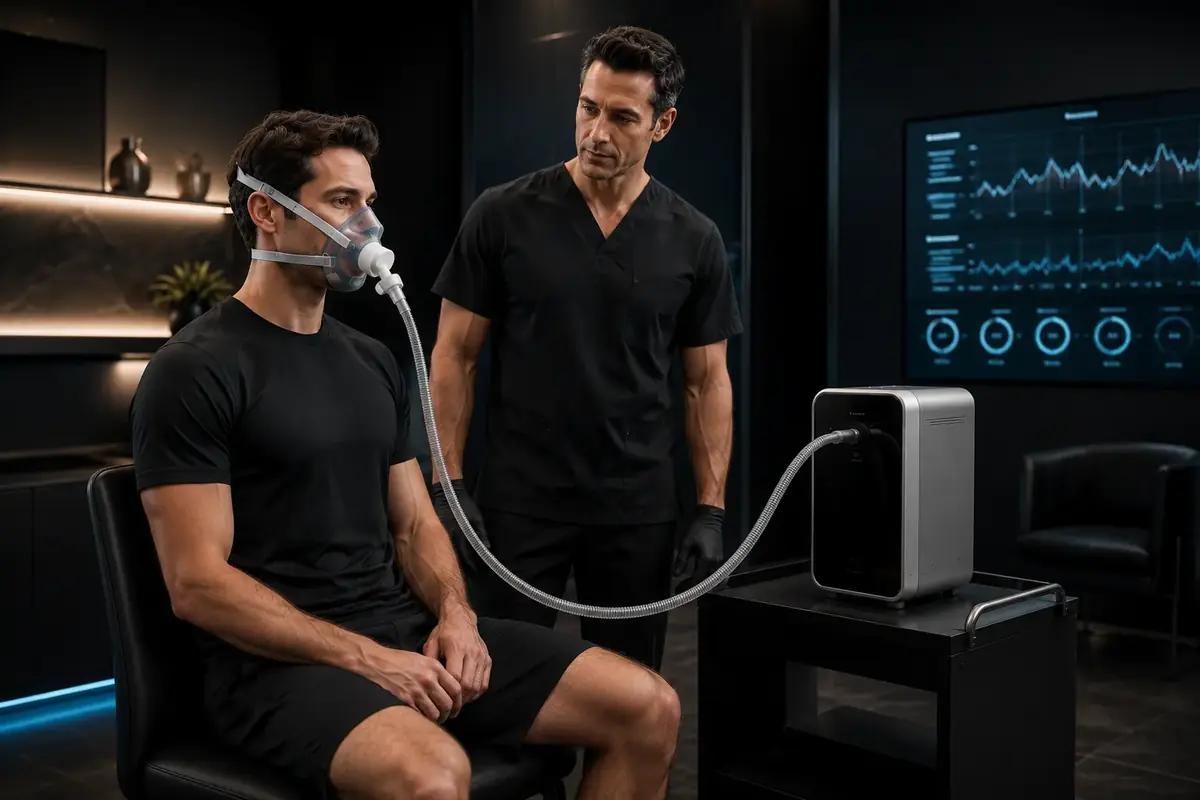
PNOĒ is a breath-analysis platform that uses indirect calorimetry and exercise testing to measure variables such as oxygen consumption, carbon dioxide production, resting metabolic rate, fuel utilization, and cardiorespiratory fitness. Those measurements can provide a more individualized view of how much energy your body uses and how it responds to different exercise intensities.
The value is not that one test can explain every aspect of metabolism. It is that measured physiologic data can replace some of the assumptions commonly used when setting calorie targets, training zones, or fitness goals. PNOĒ describes its platform as measuring multiple cardiometabolic biomarkers through breath analysis. Learn more from PNOĒ.
Key Takeaways
Your Metabolism Is Measurable Data.
Calorie Equations Are Estimates
Your age, sex, weight, and height can estimate resting energy needs, but indirect calorimetry directly measures gas exchange to provide individualized resting energy expenditure data.
Fitness Is More Than Pace
Exercise testing can provide insight into oxygen utilization, cardiorespiratory fitness, exercise thresholds, and training intensity rather than relying only on generic heart-rate formulas.
Context Still Matters
Breath testing does not replace laboratory testing, body-composition assessment, medical history, nutrition review, or physician evaluation. The strongest strategy combines relevant data sources.
What You'll Learn
From Breath To Better Decisions.
Understanding what metabolic testing can—and cannot—tell you helps turn another health metric into information you can actually use.
How PNOĒ Works
Why oxygen consumption and carbon dioxide production provide useful information about energy expenditure and exercise physiology.
Weight-Loss Applications
How measured resting metabolism may help clinicians establish more individualized calorie and activity targets.
Fitness Applications
How exercise gas-exchange data can help refine endurance, conditioning, and heart-rate training strategies.
Longevity Context
Why cardiorespiratory fitness has become an important health marker—and why it should still be interpreted alongside broader clinical risk factors.
What Does Your Metabolism Actually Mean?
People often use the word metabolism as shorthand for how easily they gain or lose weight. Physiologically, metabolism is much broader. Your body continuously uses energy to maintain temperature, circulate blood, breathe, repair tissue, support brain activity, digest food, move, exercise, and perform countless cellular processes.
One important component is resting energy expenditure, or REE—the energy your body uses while at rest. Resting metabolism accounts for a substantial share of daily energy expenditure, but it varies among individuals. Body size and lean mass matter, as do age, genetics, health status, medications, hormonal factors, recent weight change, and other variables.
Standard nutrition calculators attempt to estimate resting energy needs using equations. These are useful for population-level planning, but an estimate is not the same as a direct physiologic measurement. Research continues to show that predictive equations can differ meaningfully from measured resting energy expenditure in some individuals, particularly in populations with overweight or obesity.
How PNOĒ Measures Metabolism Through Your Breath
PNOĒ uses a technique called indirect calorimetry. Instead of attempting to measure heat production directly, indirect calorimetry evaluates oxygen consumption—often expressed as VO₂—and carbon dioxide production, or VCO₂. Those measurements can be used to calculate energy expenditure and provide information about fuel oxidation.
In a resting assessment, the goal is to determine how much energy your body is using under standardized resting conditions. In an exercise assessment, gas exchange is measured while exercise intensity increases, allowing clinicians or exercise professionals to evaluate how your cardiovascular and respiratory systems respond to greater workloads.
Preparation matters. Food intake, caffeine, nicotine, alcohol, and recent physical activity can influence resting metabolic measurements. Evidence-based protocols therefore emphasize appropriate pre-test preparation and a sufficient resting period before collecting data.
The Metabolic Dashboard
Four Measurements That Can Change The Conversation.
PNOĒ reports multiple variables. For many patients, the most understandable starting points are resting energy expenditure, respiratory exchange, cardiorespiratory fitness, and exercise thresholds.
RMR
Resting Metabolic Rate
An estimate derived from measured gas exchange of how much energy your body uses at rest.
RER
Respiratory Exchange Ratio
The relationship between carbon dioxide production and oxygen consumption, which provides information about fuel utilization.
VO₂
Cardiorespiratory Fitness
A measure of the body's ability to take in, transport, and use oxygen during increasingly demanding exercise.
Zones
Exercise Thresholds
Gas-exchange responses can help identify exercise intensities useful for individualized endurance and conditioning plans.
How Metabolic Testing Can Personalize Weight Loss
Weight loss ultimately requires sustained changes in energy balance, but that does not mean every person should begin with the same calorie target. Two people with similar body weight may have different resting energy requirements, activity levels, body composition, appetite patterns, medications, and metabolic risk factors.
Measuring resting energy expenditure can give a clinician a more individualized starting point. Rather than saying, “A calculator predicts that you burn this many calories,” the conversation can become, “This is approximately what your body used under measured resting conditions.”
That distinction can matter when designing a sustainable calorie deficit. A deficit that is too small may produce little progress. A deficit that is unnecessarily aggressive may make a program harder to maintain and can complicate efforts to preserve lean mass, support training, and maintain adequate nutrition.
A randomized controlled trial in adults with obesity found that incorporating energy-expenditure biofeedback into dietetic counseling was associated with greater weight loss than standard care in that study. That does not mean metabolic testing guarantees weight loss, but it supports the concept that measured information may improve personalization when incorporated into a broader clinical program.
At REMEDY® Health + Wellness, this type of information can complement a broader physician-guided medical weight loss evaluation rather than replacing it. Medical history, medications, nutrition, activity, body composition, symptoms, sleep, and relevant laboratory testing still matter.
What About “Fat Burning”?
Breath testing can provide information about whether the body is relying more heavily on fat or carbohydrate oxidation under specific testing conditions. This is physiologically interesting and may help guide exercise or fueling strategies, but it should not be confused with proving that a person will lose body fat.
Burning a higher proportion of fat during one test does not override total energy intake, activity, muscle mass, adherence, sleep, medications, or other factors that influence long-term body composition.
Measured vs Estimated
Why A Calculator And Your Body May Disagree.
Predictive Equation
Uses population-derived formulas based on variables such as age, sex, weight, and height. It is convenient and useful when direct measurement is unavailable, but individual error can occur.
Indirect Calorimetry
Uses measured oxygen consumption and carbon dioxide production to estimate energy expenditure under the conditions of the test. It provides individualized data but still depends on appropriate equipment, preparation, protocol, and interpretation.
Important Limitation
“Measured” does not mean infallible. A 2025 systematic review found variability in validity across indirect-calorimetry devices used in adults with overweight or obesity, while reliability ranged from poor in some handheld systems to good or excellent in other systems. Device quality and testing protocol matter.
How PNOĒ Can Personalize Fitness Training
Many exercise plans still rely on generic age-based heart-rate formulas. These can provide a rough starting point, but they do not directly measure how your lungs, heart, circulation, and muscles respond to increasing intensity.
Exercise metabolic testing can provide more individualized information by tracking oxygen consumption and carbon dioxide production as workload rises. Depending on the protocol and data collected, this can help characterize cardiorespiratory fitness and identify exercise thresholds that can be translated into more personalized intensity zones.
For Endurance Training
Knowing how your physiology responds across intensities can help structure easier aerobic work, higher-intensity sessions, and recovery days with more precision. Athletes may also use fuel-utilization information to inform training and race-fueling discussions.
For Someone Just Starting To Exercise
The value may be simpler: establish a baseline. Instead of judging progress only by the scale, an individual may also follow improvements in aerobic capacity and exercise tolerance.
For Body Composition Goals
Weight-loss programs should not focus only on producing the largest possible calorie deficit. Resistance training, adequate protein, recovery, and progressive physical activity are important parts of protecting lean tissue. Metabolic testing can add exercise-specific information while a clinician considers the larger body-composition strategy.
This becomes especially relevant for patients participating in comprehensive medical weight management, where medication, appetite changes, nutrition intake, resistance training, and lean-mass preservation may all need attention.
Evidence Snapshot
Fitness Is A Meaningful Health Marker.
Cardiorespiratory fitness is not merely an athletic statistic. Large bodies of observational evidence link lower cardiorespiratory fitness with higher cardiovascular and all-cause mortality risk.
What The Evidence Supports
The American Heart Association has described cardiorespiratory fitness as an important clinical health marker and has argued for greater consideration of fitness in health assessment. Indirect calorimetry is also widely recognized as a reference method for measuring resting energy expenditure when performed appropriately.
This evidence supports measuring relevant physiology. It does not establish that a single PNOĒ score can diagnose disease, predict an individual's lifespan, or replace standard medical risk assessment.
American Heart Association — Cardiorespiratory Fitness Scientific Statement PubMed — Indirect Calorimetry: A Practical Guide for Clinicians PubMed — Best Practices for Performing Indirect Calorimetry
Where Longevity Fits Into Metabolic Testing
Longevity medicine can become overly focused on proprietary scores and biological-age labels. A more clinically useful approach is to ask which modifiable physiologic characteristics are associated with healthier aging and which measurements can guide reasonable interventions.
Cardiorespiratory fitness belongs in that conversation. Higher fitness is consistently associated with better health outcomes at the population level, and fitness is modifiable through appropriate physical activity and exercise.
PNOĒ uses VO₂-related information as part of its health and “biological age” reporting. That may be useful as a motivational or comparative metric, but it should not be interpreted as a literal measurement of how old every organ in your body is. Biological aging is multidimensional and can involve cardiovascular risk, metabolic health, body composition, blood pressure, glucose regulation, lipids, sleep, smoking, kidney function, inflammation, genetics, and other factors.
A more comprehensive longevity strategy therefore combines fitness information with broader evaluation. At REMEDY®, that may include review of relevant metabolic health blood markers, body-composition goals, symptoms, lifestyle, medical history, and other diagnostics when clinically appropriate.
Patients interested in a broader performance and healthy-aging strategy may also explore physician-guided TRT & hormone optimization care. The objective is not to collect as many scores as possible. It is to identify measurements that meaningfully inform decisions.
Physician-Guided Perspective
The most useful question is not, “What is my biological age?” It is, “Which measurable factors affecting my health and performance can I realistically improve?” Fitness, body composition, blood pressure, nutrition quality, sleep, metabolic health, tobacco exposure, and clinically relevant biomarkers usually matter more than chasing one composite score.
What PNOĒ Testing Cannot Tell You By Itself
Advanced testing becomes less useful when a number is treated as a diagnosis. PNOĒ should be understood as one source of physiologic information rather than a complete medical evaluation.
- It does not replace blood testing for glucose, lipids, thyroid function, hormones, nutrient status, or other laboratory concerns.
- It does not determine why someone has unexplained fatigue, shortness of breath, weight change, or poor exercise tolerance.
- It does not independently diagnose cardiovascular, pulmonary, endocrine, or metabolic disease.
- It does not guarantee weight loss, athletic improvement, or increased lifespan.
- It should not be used to justify excessively restrictive calorie intake or inappropriate exercise intensity.
Unexpected or concerning results may be a reason for additional clinical evaluation rather than an invitation to simply train harder or eat less.
Myth vs Fact
What Metabolic Testing Really Means.
Myth
“A slow metabolism is the reason I cannot lose weight.”
Resting energy expenditure varies, and weight loss itself can alter energy needs. But body weight is influenced by many factors including food intake, activity, appetite, medications, sleep, body composition, health conditions, and adherence. One metabolic number rarely explains everything.
Fact
Measured energy expenditure can improve personalization.
When properly obtained, indirect-calorimetry data can give clinicians a measured starting point for nutrition planning rather than relying solely on population-based predictions.
Myth
“If I burn more fat during the test, I will automatically lose more body fat.”
Substrate utilization during a test describes fuel use in that physiologic moment. Long-term body-fat change still depends on overall energy balance, nutrition, activity, muscle preservation, adherence, and individual medical factors.
Fact
Fitness provides information the scale cannot.
Body weight alone cannot tell you how effectively your cardiovascular and respiratory systems support exercise. Tracking cardiorespiratory fitness can provide a meaningful additional measure of progress.
People Also Ask
Common Questions About Metabolic Testing.
Is PNOĒ testing the same as a VO₂ max test?
Not exactly. VO₂ or VO₂ peak assessment can be part of exercise metabolic testing, while PNOĒ may also evaluate resting metabolism, gas exchange, fuel utilization, and other cardiometabolic variables.
Can metabolic testing tell me exactly how many calories to eat?
It can provide a measured resting-energy baseline, but daily calorie needs also depend on activity, goals, body composition, health status, and the planned rate of weight change.
Can PNOĒ help if I am already taking a weight-loss medication?
Potentially. Metabolic and fitness data may add context to a broader physician-guided plan, but medication management, nutrition adequacy, body composition, resistance training, and clinical monitoring remain essential.
How often should metabolic testing be repeated?
There is no universal schedule. Repeat testing may be useful after meaningful changes in weight, fitness, body composition, training status, or treatment strategy when the result could change clinical decisions.
FAQ
PNOĒ Testing Questions.
The usefulness of metabolic testing depends on proper preparation, appropriate testing protocols, and interpretation in the context of your overall health and goals.
What is PNOĒ metabolic testing?
PNOĒ is a breath-analysis platform that measures physiologic variables including oxygen consumption and carbon dioxide production. Depending on the test performed, the information can be used to assess resting energy expenditure, fuel utilization, cardiorespiratory fitness, and exercise-response metrics.
Is indirect calorimetry more accurate than a calorie calculator?
Indirect calorimetry measures gas exchange to estimate energy expenditure, whereas predictive equations use population-derived formulas. Direct measurement can provide more individualized information, although accuracy still depends on device performance, patient preparation, and testing protocol.
Do I need to fast before metabolic testing?
Preparation requirements depend on the specific protocol. Food, caffeine, nicotine, alcohol, and recent exercise can affect resting metabolic measurements, so patients should follow the testing center's preparation instructions carefully.
Can PNOĒ testing help with medical weight loss?
It may provide useful information about resting energy expenditure and fuel use that can complement a personalized weight-management plan. It does not replace medical evaluation, nutrition planning, behavioral support, body-composition monitoring, or medication management when medication is appropriate.
Can the test determine my ideal workout heart rate?
Exercise gas-exchange testing can help identify physiologic thresholds that may be translated into more individualized training zones. The appropriate exercise prescription still depends on your health, training history, medications, symptoms, and goals.
Is VO₂ max really related to longevity?
Cardiorespiratory fitness is strongly associated with cardiovascular and all-cause health outcomes in observational research. It is an important health marker, but it is not the only determinant of longevity and cannot predict an individual's lifespan.
Does a low metabolic rate mean something is medically wrong?
Not necessarily. Resting energy expenditure differs among people and is strongly influenced by body size and lean mass. A result that seems unexpected should be interpreted alongside symptoms, medical history, medications, laboratory findings, body composition, and testing conditions.
Who may benefit most from metabolic testing?
Testing may be useful for people pursuing individualized weight management, endurance or fitness goals, performance optimization, or baseline cardiorespiratory assessment—particularly when the results will be incorporated into a structured clinical or exercise plan.
This article is for general education and is not medical advice. All treatments require an evaluation by a licensed clinician. Eligibility, prescriptions and treatment plans are determined by a licensed physician. Individual results vary. For emergencies, call 911.
Topic guides